
How to Photograph Fireworks With a DSLR Camera
How do you photograph a public fireworks display with a DSLR or mirrorless camera? Start with a stable tripod, a wide-enough view of the sky, low ISO, a moderately narrow aperture and a multi-second exposure. The best settings depend on the brightness and distance of the display, but the technique becomes much easier once you can check the first few shots and make adjustments.
This guide is about photographing an organized public display from an approved spectator area, not handling or setting off fireworks. Use the official viewing locations, stay behind event barriers and follow organizers’ instructions. You can concentrate on composition and camera settings without needing to approach the display itself.
What equipment do you actually need?
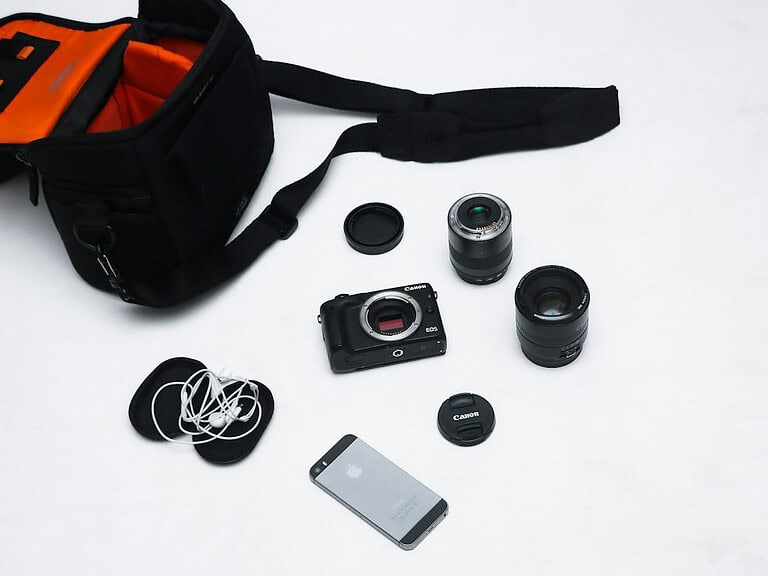
- DSLR or mirrorless camera: a camera with manual exposure controls is useful, but a basic camera can produce excellent images.
- Stable tripod: limits camera movement during exposures lasting several seconds.
- Wide or moderate zoom lens: makes it easier to frame unpredictable bursts and include surroundings.
- Remote shutter release or camera self-timer: helps avoid introducing shake when triggering an exposure.
- Charged batteries and spare memory: important for a long evening outdoors.
- Small light and weather protection: useful for checking camera controls in low light and keeping equipment dry if the weather changes.
A remote release is useful but not strictly essential if the camera offers a short self-timer or compatible remote-control method. Some lenses have stabilization settings intended to be changed when using a tripod, so check the manufacturer’s instructions for your camera and lens.
A useful starting point for fireworks exposure
| Camera mode | Manual (M), where you control shutter speed, aperture and ISO |
|---|---|
| ISO | Start around ISO 100–200 if available; keep the background from becoming needlessly bright |
| Aperture | Start near f/8–f/11 and adjust based on highlights and the surrounding scene |
| Shutter speed | Try a few seconds first; use Bulb mode if your camera supports it and you want flexible timing |
| Focus | Autofocus on a distant illuminated landmark before the show, then use manual focus to prevent hunting |
| Image format | RAW is helpful for editing bright fireworks against dark surroundings |
| White balance | Auto can work; a consistent setting can make batches easier to edit |
| Tripod | Keep the center column as low as practical for stability |
These are starting values, not universal camera settings. Nikon’s official fireworks photography guide suggests ISO 200 and f/11 as an example, together with a tripod, a remote release and exposure adjustment based on the first image. Nikon’s ISO guide explains why lower ISO values are practical when a camera is stabilized.
Why a few seconds of exposure can work so well
Fireworks are bright moving points of light. A relatively long camera exposure captures the path of that light across the sky, making arcs, clusters and trails appear in the photograph. An exposure that is too brief may record only part of a burst, while one that stays open too long can cause several bright bursts to merge or obscure one another.
Start by reviewing a sample photo. If the brightest areas are blown out and lose all detail, try a shorter exposure or narrower aperture. If the display is too dim, consider a modest exposure adjustment. There is no single correct duration because the display’s brightness and density change throughout the event.
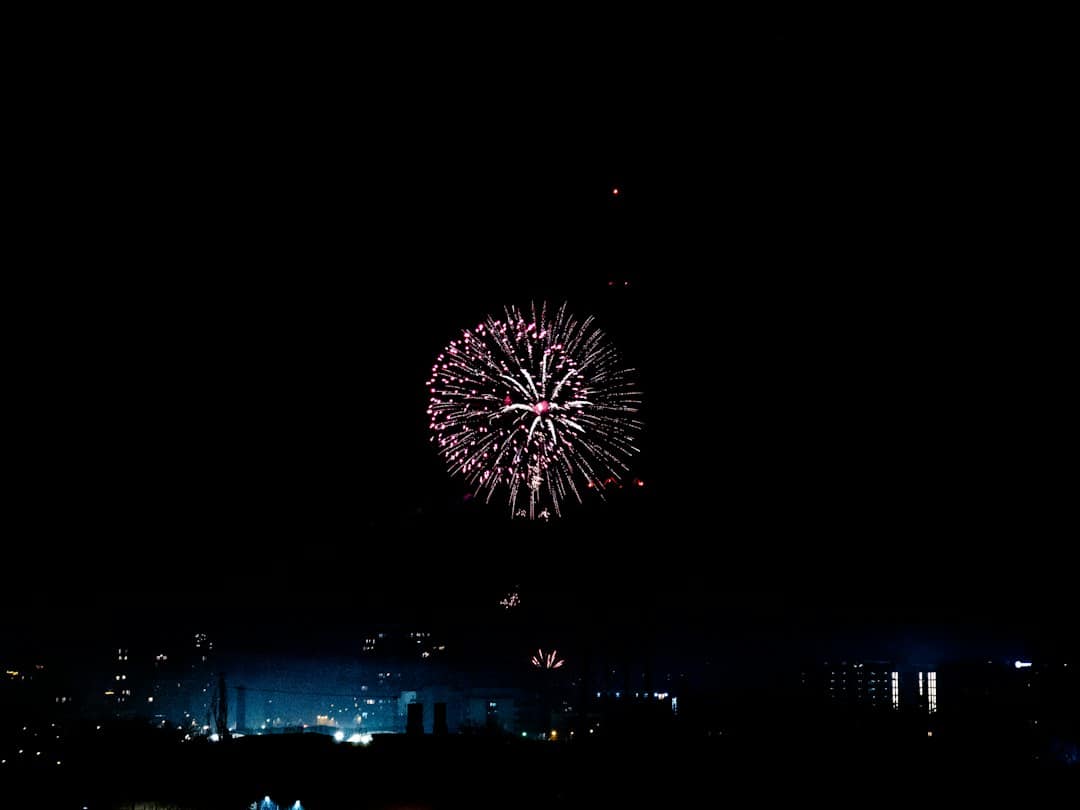
Illustrative fireworks photograph by Trace Du monde via Unsplash. This is an example of including city context, not an image claimed to have been captured during testing for this article.
Plan the composition before the show starts
A display against an empty black sky can be colourful, but including a recognizable skyline, building, waterfront or hillside often gives the photograph a stronger sense of location. Arrive at the official viewing location with enough time to consider where bursts are likely to appear and whether streetlights or nearby spectators will obstruct the view.
A wide-angle lens allows room for bursts of unexpected size. If the display is far away, a moderate telephoto view can emphasize its details. Avoid framing so tightly that the brightest burst extends beyond the image. A little extra space around the sky often gives you more flexibility when cropping later.
Focus before the sky goes dark
Autofocus can struggle when the scene becomes mostly black. Before the fireworks begin, use a distant building, bright sign or another appropriately distant stationary object to establish focus. Review it at magnification. On a camera with manual focus, you can then keep that position unless the lens or framing changes.
Simply turning the focus ring all the way to the infinity mark may be inaccurate on some modern lenses. Use the camera’s magnified view to confirm actual sharpness wherever possible. This is especially helpful when shooting at wider apertures.
Use the tripod safely and practically
A tripod reduces the shake that turns bright points of light into unwanted streaks. Put it on stable ground within the approved viewing area, keep the legs arranged so nobody is likely to trip, and avoid obstructing pathways or other spectators. Set up where the organizer allows equipment and do not cross barriers to seek a better angle.
A camera strap hanging in wind can transmit motion to the camera; secure it while taking long exposures. If your camera and lens have stabilization features, consult their documented tripod recommendations. The goal is a sharp, steady shot without creating an obstruction for others.
Fireworks reflections and foreground interest
Reflections over water, glowing buildings or silhouettes can make a composition richer than fireworks alone. These elements also influence exposure: a bright skyline may require a different balance than a completely dark lake. A wide shot with interesting surroundings often tells a stronger story about the event than an isolated explosion in the sky.
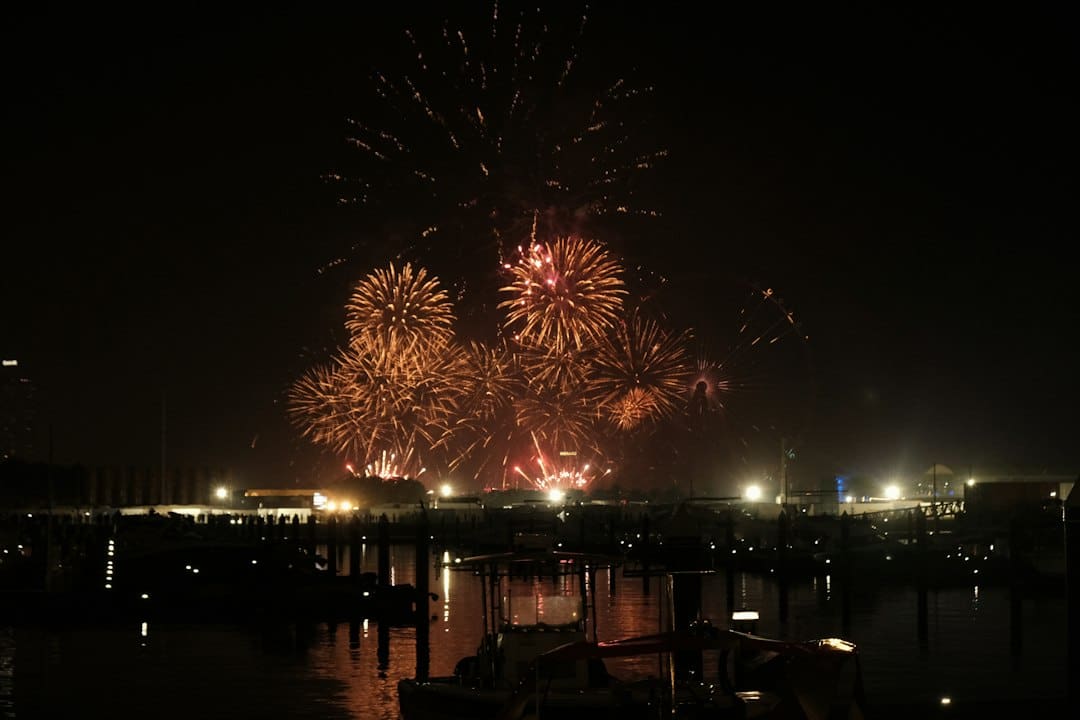
Illustrative fireworks-over-water photograph by Mauricio Krupka via Unsplash.
Review the histogram, not just the LCD preview
A small rear LCD can make a dark scene appear brighter than it really is, especially at night. Inspect the histogram and magnify key areas to judge whether fireworks retain detail. The brightest points may still reach white, but extensive burned-out areas reduce colour and pattern. If you plan to edit the image, RAW files provide more flexibility than highly compressed JPEGs.
A series of exposures with slightly different settings is more informative than trusting one picture. Take notes or compare the image metadata afterwards so you know which adjustments improved the result.
Common fireworks photography problems
The trails are blurry or shaky
Check tripod stability, shutter triggering, wind and camera movement. A small amount of deliberate light trail is part of fireworks photography; shake generally affects the entire frame, including buildings that should remain sharp.
The fireworks look like white blobs
The brightest sections are likely overexposed. Try a shorter exposure, a lower ISO if practical or a narrower aperture. Keep the background exposure in mind when adjusting.
The camera keeps hunting for focus
Find an appropriate distant target, verify sharpness and lock manual focus. Avoid repeatedly asking autofocus to lock onto a featureless dark sky.
The burst doesn’t fit in the picture
Start wider, then crop once you know the likely height and width of the display. A changing program may require different framing throughout the show.
How to handle the images afterwards
Begin with minor exposure and white-balance adjustments. Protect highlight detail where possible, and avoid pushing shadows so aggressively that the sky becomes blotchy. A measured crop can remove distractions without losing the sense of location. If you combine exposures, label the resulting image accurately as a composite where that matters to the publication context.
Good results don’t require excessive processing. Aim to show believable colour and shape, and compare your changes to the original image to avoid creating harsh artificial edges around each burst.
Protecting and transporting your camera equipment
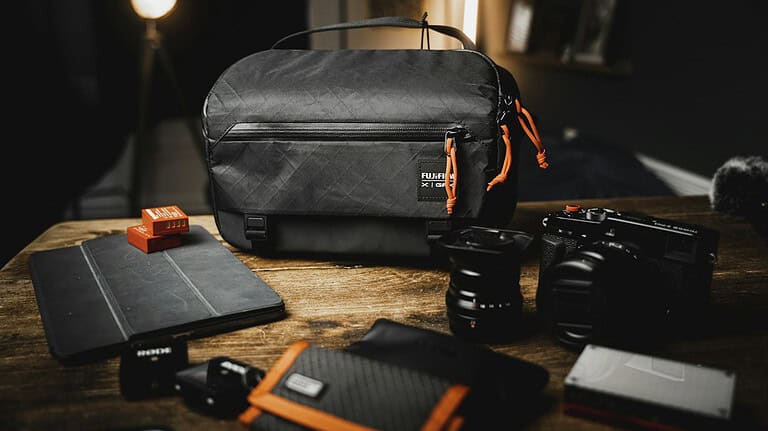
Nighttime events often involve crowds and long periods of waiting. A padded backpack keeps spare lenses and batteries organized, while a shoulder bag may offer easier access to one spare lens when standing. See camera backpack vs shoulder bag for choosing a carrying format.
Pack lenses and accessories so they cannot move against hard objects, and keep liquids in a separate compartment. Our camera backpack packing guide covers those basics. For uncertain weather, read the limitations of water-resistant camera bags.
Frequently asked questions
Can you photograph fireworks without a DSLR?
Yes. Many mirrorless cameras and other devices have useful night-photography controls. A camera with adjustable shutter time and a stable support gives you more flexibility, but composition still matters.
What shutter speed should I use?
Several seconds is a reasonable experiment when photographing a distant public display from a tripod. A denser or brighter sequence may call for shorter exposures. Review images and adjust rather than relying on a rigid formula.
Is a remote shutter release necessary?
It can improve convenience and reduce shake, especially for Bulb exposures, but a self-timer may also work for fixed-length exposures. Check the remote compatibility of your particular camera.
What if I only have a kit zoom lens?
A standard kit zoom can be entirely suitable. Start near its wider end to ensure the display fits and adjust framing based on the first bursts.
Final checklist for your next public display
- Use a designated public viewing area and follow event restrictions.
- Choose a clear, stable camera position and frame with room for bright bursts.
- Start with a low ISO and a moderately narrow aperture.
- Try a multi-second exposure and check sharpness and highlights.
- Focus on a distant stationary subject before the event begins.
- Keep spare memory and battery power available.
- Review results periodically and adjust exposure or framing as needed.
This is a technique you can refine at different public displays without special camera accessories. For detailed manufacturer guidance, see Nikon’s fireworks guide. For selecting a bag to carry equipment, explore our camera backpack comparisons. Editorial note: this guide is research-based and does not claim that the example photographs were taken by Proton-Pack.