

5 Hiking Camera Backpacks for Photographers
Affiliate disclosure: This article contains affiliate links (paid links). If you buy through them, Proton-Pack may earn a commission at no extra cost to you. As an Amazon Associate I earn from qualifying purchases. Learn about our editorial policy.
A camera backpack for hiking needs to protect photography gear without compromising the space and comfort required for the trip. That means evaluating the finished load, padded dividers, camera access, non-camera storage and weather protection—not simply looking for the backpack that claims to hold the most lenses. A bag suitable for short city walks can become cumbersome on a longer day outdoors.
This guide revisits five models from the earlier Proton-Pack article: Poler, Thule Covert, Altura Photo Sling, Manfrotto Pro Light Bumblebee-220 and Dakine Sequence 33L. Several of those exact models are now legacy or unavailable, so they are identified as such. We also include verified specifications for the current Thule Covert DSLR 24 L.
Which camera backpack style works for which trip?
| Backpack | Strength | Important limitation |
|---|---|---|
| Compact camera sling | Quick access for a smaller camera kit | Usually less comfortable or capable for carrying many lenses and personal items over long distances |
| Camera-first backpack | Good internal camera padding, equipment organization and access | Can use too much volume for cameras and leave insufficient room for clothing or essentials |
| Hybrid camera and travel backpack | Removable camera pod plus space for non-camera items | A compromise that may not fit very large equipment or be particularly light |
| Large legacy photo backpack | Ample camera and accessory storage for an intensive kit | Extra weight and bulky dimensions; limited current support if discontinued |
1. Poler Orange Camera Backpack: a legacy style
Poler’s Orange Label camera bags were designed with a distinctive outdoor-inspired appearance. However, the specific original Poler Orange camera backpack featured in the older guide could not be matched to a current official product listing with complete measurements. A designer’s portfolio of Poler Orange Label bags confirms that older camera-bag designs existed, but does not establish current availability or capacity for a particular listing.
For that reason, the bag should remain a historical comparison rather than a current recommended purchase. If buying one used, check the interior padding, external straps and exact usable dimensions. Outdoor styling alone does not guarantee comfortable support for camera equipment.
2. Thule Covert: a current hybrid reference
The current Thule Covert DSLR 24 L uses a removable camera pod within a broader everyday-style backpack. Thule lists a 24 L volume, 33 × 23 × 48 cm exterior, and 1.9 kg weight. Its removable pod can be carried separately, while the main backpack offers space for additional equipment and personal items.
Side access and a rear-panel opening are helpful depending on how frequently you use the camera. The padded laptop compartment is specified for up to a 16-inch MacBook Pro or 14-inch PC, but device fit should still be checked against the published compartment dimensions. A 24 L bag is not a guarantee that every large telephoto lens or camera cage will fit.
For hikers who need some non-camera storage as well as camera protection, the hybrid configuration is worth comparing. Its weight when loaded can still be considerable, and there is a meaningful difference between a camera-specific bag and a specialist hiking pack designed for extensive outdoor equipment.
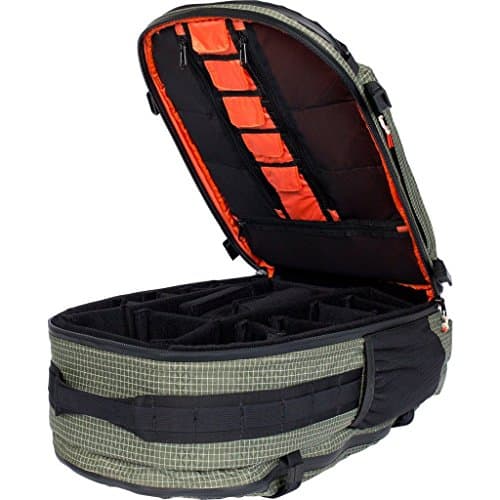
Legacy Thule product photograph from the original article. The photograph may show an earlier generation; for images and specifications of the current 24 L Covert, use Thule’s current manufacturer listing.
3. Altura Photo camera sling: convenient for a smaller kit
Altura Photo’s camera sling uses a different carrying format from a two-shoulder backpack. Shotkit’s review of the sling lists an approximate 17 × 8.1 × 6.4-inch exterior, a weight around 590 g and a side-access camera opening. Its design may suit a small camera and two modest lenses when quick access is more important than extensive carrying capacity.
The single-strap configuration and comparatively small interior are limitations for larger kits or long carrying distances. Shotkit’s review also notes that the model did not include a rain cover, an important distinction from Altura’s other backpacks. Do not transfer specifications from the Great Explorer or a two-shoulder Altura bag onto the sling.
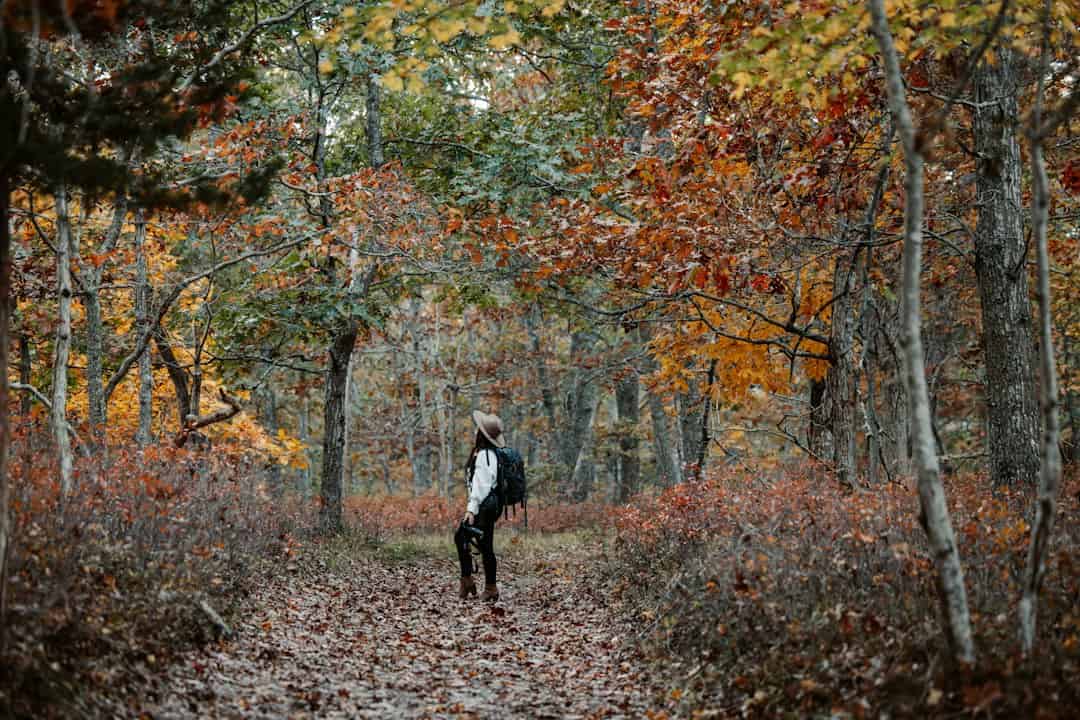
Outdoor-backpack illustration by Royce Fonseca via Unsplash. The pack shown is not identified as the Altura sling or a tested camera bag.
4. Manfrotto Pro Light Bumblebee-220: a large legacy pack
The older Manfrotto MB PL-B-220 was designed for a substantial professional camera system. A retailer specification archive lists an empty weight of approximately 2.97 kg, with exterior measurements of about 52 × 34 × 28 cm. That is a large and heavy bag before adding cameras, lenses and personal items.
The same retailer marks the product end-of-life or unavailable. A used example may still be suitable for someone with extensive gear, but it should not be described as a currently supported lightweight hiking pick. Inspect padding, zippers, straps and the rain fly carefully and compare the overall carrying load to more recent options.
5. Dakine Sequence 33 L: another discontinued favourite
The Dakine Sequence 33L was a large camera-friendly backpack with a removable padded camera block and an outdoor-oriented carrying system. The documented design included rear access, a padded laptop sleeve, a rain cover and approximately 33 L total volume. Historic sources list an empty weight around 5 lb. These are useful specifications for evaluating a used pack.
The model is now described as unavailable or discontinued by retailers, including OpticsPlanet. Its appeal was the combination of an outdoor pack with removable camera organization; its trade-offs were bulk, weight and the need to compare true gear fit. Don’t expect the original model’s warranty or accessory supply to be identical to current Dakine bags.
Why the loaded weight matters more than a product’s litre rating
Bag capacity is useful for comparing broad sizes, but the real feel of a photography backpack is determined by the complete camera kit and the distribution of that weight. A professional body, telephoto lens, tripod and several smaller lenses can add considerable load. An additional jacket, water or personal items also need space separate from delicate gear.
A bag that holds every piece of camera equipment may still be inappropriate for the intended outing if its harness does not support the finished load comfortably. Before choosing any hiking-oriented photo backpack, compare the manufacturer-specified carrying system with your equipment and walking duration.
Camera access in an outdoor setting
Side access is convenient when you want to retrieve one camera without opening the entire pack. Rear access can help keep the main compartment organized and secure while the backpack is worn. A removable camera pod adds versatility when a bag also needs to carry general items. No single arrangement is automatically superior.
Think about how you actually shoot. If the camera stays out for an extended session and the pack is primarily transportation, a clear full-compartment opening may suffice. If you frequently switch between two lenses and pack the camera away between stops, quicker access may be worth prioritizing.
Weather protection and camera safety
A separate rain cover can reduce direct exposure to water, but it does not make a normal camera backpack a waterproof enclosure. Seams, zippers, straps and the way the bag is opened can all allow moisture in. A removable camera insert or padded compartment protects against ordinary contact but does not guarantee resistance to hard impacts.
See our guide to waterproof and water-resistant backpacks and camera backpack packing checklist for those separate concerns.
How to choose between a sling and backpack
- For a smaller kit and short photography walks, a sling can be easy to access.
- For multiple lenses and a laptop, a two-shoulder backpack may distribute the load more evenly.
- For mixed camera and everyday carry, a hybrid with a removable camera pod can be useful.
- For large professional kits, consider full camera storage, but factor the higher empty and loaded weight into the decision.
- For older stock, inspect zippers, harness foam, compartment padding and accessories before buying.
Frequently asked questions
Can I use a regular hiking backpack for a camera?
A suitably sized padded camera insert can add protection, but the bag still needs to hold the insert securely. An unpadded compartment is not equivalent to a dedicated camera bag.
Is a rain cover enough for wet weather?
A cover can help with ordinary rain exposure but is not a guarantee against water entering the bag. Sensitive equipment may need additional protection appropriate to the conditions.
Are 33 L camera backpacks better than 24 L models?
Not necessarily. Larger capacity can help with bulky gear, but also increases bag size and often weight. Fit, harness design and non-camera storage matter more than a single litre figure.
Should I buy a discontinued model if I find it used?
It may be reasonable when the exact condition, camera fit and price are attractive. Check that padding, zippers, straps and required accessories are intact and that you understand the seller’s return terms.
Our recommendation
For a current, clearly specified hybrid camera backpack, the Thule Covert 24 L is a useful reference point. Altura’s small sling suits a different, lighter use case. The original Poler, Manfrotto and Dakine choices are legacy comparisons that should not be presented as routinely available current best buys. Choose based on the camera kit and carrying needs rather than an outdated top-five ranking.
Historical shopping links are provided for reference; incorrect product redirects have been replaced with verified model-specific sources: Poler-related listing, Thule Covert 24 L manufacturer specifications, secondary Thule offer, Altura Photo, Manfrotto, Dakine Sequence 33 L product details and an earlier related bag review. Some remaining affiliate destinations and inventory may change; verify the exact product generation before ordering.
Sources and disclosure: Product details are drawn from Thule Covert specifications, Shotkit’s Altura review, Manfrotto legacy listing, and Dakine Sequence archive. No new field tests were conducted. Legacy product photos are illustrative, and affiliate links may earn commissions.