
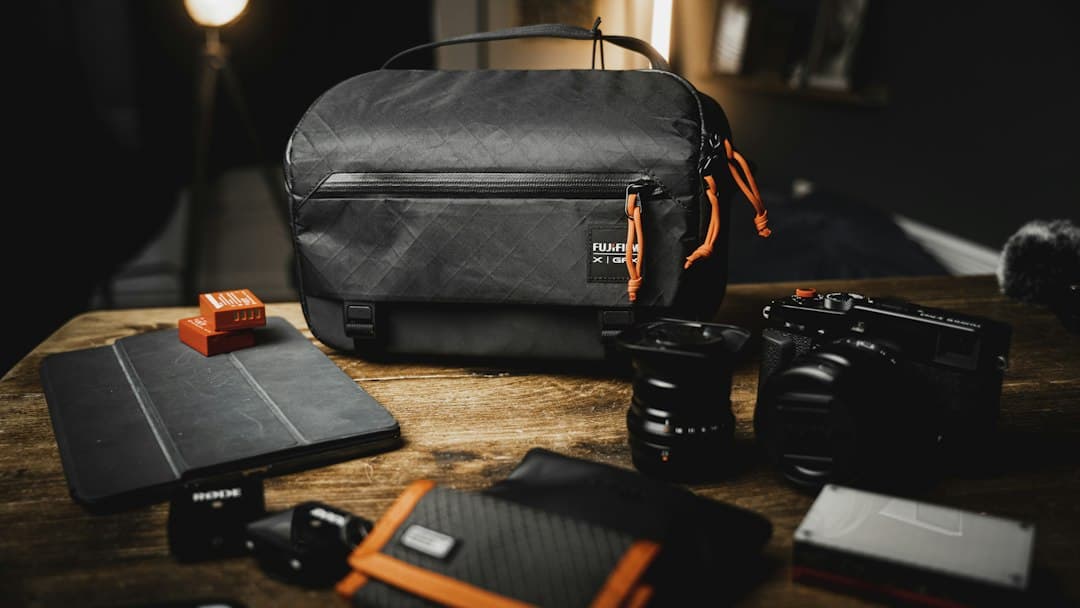
Camera Sling Bag vs Backpack: Which Works Better for Photography?
Camera sling bag or backpack? For photographers carrying one camera and one or two modest lenses, a well-padded sling often wins on convenience: the bag can be rotated forward for quick access without fully taking it off. For longer walks, larger kits, a tripod, a laptop or clothing, a two-strap camera backpack usually makes more sense because it distributes the load and provides more organizational room. The difference is not simply “small versus big”—access design, shoulder comfort, bag stability and your real equipment matter more than marketing photographs.
This guide compares how slings and backpacks behave during street photography, travel, outdoor walks and longer shooting days. It also examines current documented examples from Peak Design, Lowepro and Think Tank. You will find a realistic fit checklist and guidance on when a messenger bag or a removable camera cube may be the better compromise.
Editorial transparency: This is a researched design and purchasing guide, not a new hands-on field test. Product specifications and advertised features are attributed to manufacturers. The photography shown is illustrative, not evidence that a particular model was tested. Verify the exact generation and dimensions before purchasing.
The quick decision: sling or backpack?
- Choose a camera sling if your regular kit is a small mirrorless body, one attached lens and perhaps a compact spare lens; you change cameras or batteries frequently; and you want access without setting the bag down.
- Choose a two-strap camera backpack if you carry several lenses, a larger DSLR, laptop, jacket, water or tripod—or spend substantial time walking between shooting locations.
- Consider a compact sling-style camera backpack if you want one-shoulder quick access but slightly more internal organization. Check that the access door faces the right direction when you swing it around.
- Consider a removable camera cube if you already own a comfortable everyday backpack; our camera cubes and backpack inserts guide explains the fit trade-offs.
- Do not decide by liters alone. Compare your assembled camera-and-lens dimensions with the usable padded space, and pay attention to the empty bag weight.
Sling versus backpack: at-a-glance comparison
| Criterion | Camera sling | Camera backpack |
|---|---|---|
| Typical carrying pattern | One padded crossbody shoulder strap | Two shoulder straps; sometimes sternum and waist support |
| Speed of camera access | Often quick to rotate forward and open | Varies: top, side or rear access; some require removing bag |
| Smaller mirrorless setup | Usually a strong fit | Can be unnecessary bulk unless other items are needed |
| Several lenses or larger bodies | Fits only some models; check internal depth | Typically offers more room and divider choices |
| Walking with a heavier kit | Asymmetrical load can become tiring | Generally spreads the weight more evenly |
| Tripod, laptop, rain jacket | May be limited, even on larger slings | Often easier to accommodate, model dependent |
| Travel and crowded areas | Compact footprint, but straps and zippers still need attention | Better for larger loads; may be awkward in a dense crowd |
| Weather resistance | Depends on shell, closures and cover | Depends on shell, closures and cover |
What counts as a camera sling?
A true camera sling bag is typically a small padded crossbody bag, designed to ride on the back or hip and slide to the front. Many have internal dividers, a camera compartment and exterior pockets. This is different from a camera strap sling, which suspends the camera itself from a strap and does not protect a lens or spare equipment inside a padded bag. It is also different from a conventional messenger bag with a broad rectangular shoulder flap.
Some “sling” products are surprisingly tall, more like narrow one-strap backpacks. Lowepro’s Slingshot line illustrates the distinction: it combines a sling-style carry with extra compartments and a rotation-to-front access concept. Do not assume every model marketed as a sling opens in the same direction or can be worn comfortably over either shoulder.
If you have been deciding between a shoulder bag and a two-strap pack already, our camera backpack versus shoulder bag comparison explains the broader differences in everyday carrying.
The real advantage of a sling: access while shooting
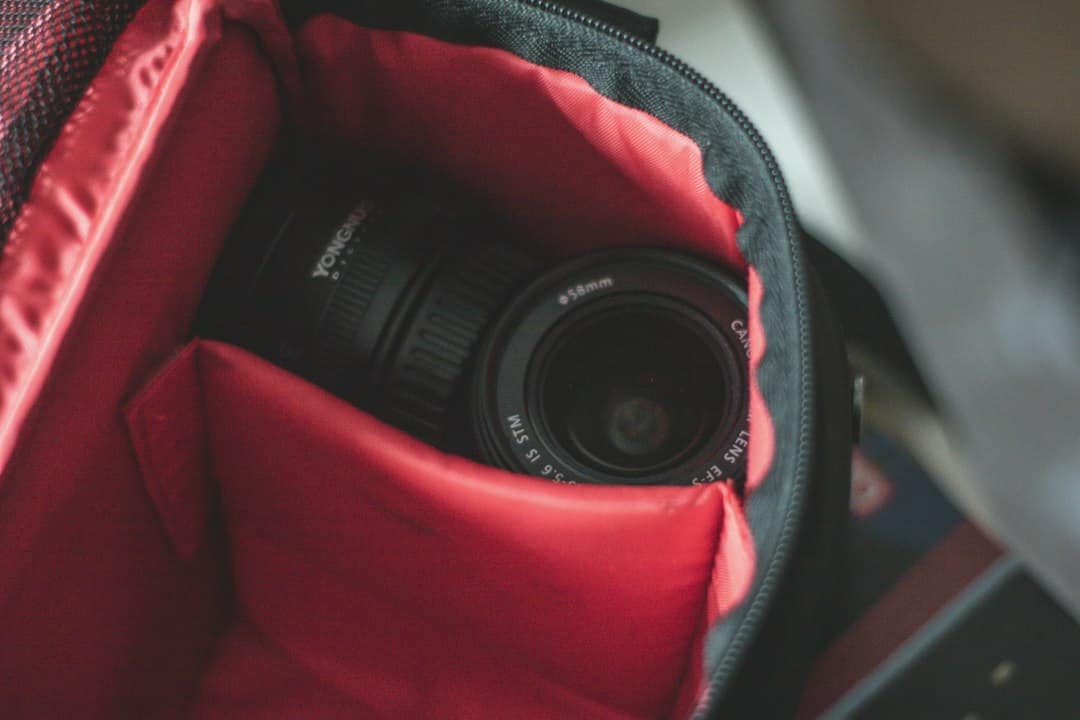
The strongest argument for a camera sling is the ability to rotate the bag from your back to your front. You can stand on a dry, stable surface, bring the bag across your torso, unzip its camera compartment and retrieve a lens or battery. With a top-opening sling, the opening is often visible while the bag is in front of you. That can be convenient for walking around a city or attending an event where you frequently move between photographing and carrying gear.
However, quick access depends on more than the word “sling” on the product page. Check whether the zipper faces upward when the bag is rotated, whether the main flap opens toward or away from the ground, and whether the camera can be removed without catching the lens hood on a divider. An overfilled sling may be slower than a well-organized side-access backpack.
If your camera stays on a separate carrying strap and the bag is mainly for accessories, the access question changes. Compare the camera strap options for hiking and hands-free camera harness guide rather than assuming a sling bag must be the primary carry method.
Why backpacks usually win with heavier equipment
A properly adjusted two-strap backpack distributes the camera load over both shoulders. A sternum strap can help stabilize it, and a supportive hip belt on suitable models can transfer some of the load to the hips. For longer walks or heavier kits, that is often preferable to concentrating the same weight through one sling strap and one shoulder.
Comfort is not guaranteed merely because a bag has two shoulder straps. Harness curvature, shoulder pad shape, load placement, total weight and your body movement all affect fit. Some backpacks are relatively uncomfortable despite large capacity, while a lightly loaded sling may be perfectly comfortable for a short outing. The practical question is how much you carry for how long and whether the load shifts when you walk.
If you frequently carry water, lunch and extra clothing along with camera equipment, start with our hiking camera backpack comparison. For longer travel days, our camera bags for air travel guide also addresses the importance of usable compartments and airline fit.
Real product examples: what the designs tell us
The following are manufacturer-referenced examples, not a claim that all current market options were tested or that any one is universally “best.” Model naming and capacities can change. We deliberately avoid tying the article to short-lived prices or retailer stock.
Peak Design Everyday Sling: 3L, 6L and 10L
Peak Design offers the Everyday Sling in 3-, 6- and 10-liter versions. The manufacturer describes an adjustable padded crossbody strap, weather-resistant shell construction, organized pockets and removable FlexFold dividers. The concept scales from a smaller everyday camera setup to a more substantial arrangement; the bigger 10L model is not just a roomy replacement for every camera backpack.
Why you might like it: the divider design and crossbody carry make sense when a camera body, compact lens and small accessories need to be ready. The smaller models are much easier to keep compact. Watch-outs: the actual space inside is less than external dimensions, and the 3L may not fit a camera with a long zoom mounted. If you require a laptop or other bulky items, compare the larger version carefully or move to a backpack.
Peak Design lists a 3L exterior near 30 × 12 × 19 cm, while the 6L and 10L models are progressively wider and taller. These are useful orientation numbers, not promises about a particular camera. See Peak Design Everyday Sling specifications and check the exact size guide for internal fit.
Lowepro Slingshot SL 250 AW III: a taller hybrid design
The Lowepro Slingshot SL 250 AW III is a 10L sling-style camera bag. Lowepro specifies QuickDoor camera access, room for a compact mirrorless or DSLR kit, an up-to-11-inch tablet pocket, compact tripod attachment and an All Weather AW Cover. Unlike a simple waist-level sling, this model is shaped more like a narrow daypack with camera and personal-item zones.
Why it might suit you: the dedicated camera area, tablet sleeve and accessory space can bridge the gap between a compact sling and a larger backpack. It can be a sensible format when you need a quick camera transition but cannot leave headphones or a small personal item behind. Trade-off: one-shoulder carrying remains one-shoulder carrying, even if the bag holds 10 liters. A bag that stores more equipment does not guarantee a comfortable full-day load.
Think Tank TurnStyle V2: a narrow, rotating sling format
Think Tank’s TurnStyle V2 design shows another approach: a tall, slim crossbody bag intended to rotate forward for access. In the company’s published specifications, the TurnStyle 10 V2.0 is approximately 21 × 39 × 13.2 cm externally, with an interior around 18 × 32 × 12.2 cm and an additional small tablet compartment. The design emphasizes a small-camera workflow and includes stabilization features intended to limit movement when carried.
Why you might like it: the narrow body and front-access concept are practical when the kit is modest and the photographer changes lenses on the move. Watch-outs: being tall does not mean the compartment is wide or deep; verify whether your camera with a mounted lens can be inserted in the correct orientation. The TurnStyle V2 is an established design, so assess current stock and generation separately from the design comparison. See Think Tank’s TurnStyle V2 specifications.
Peak Design Everyday Backpack: a two-strap counterexample
Peak Design’s Everyday Backpack comes in 20L and 30L sizes and illustrates what a dedicated camera backpack can provide: dual side-access zippers, adjustable dividers, top access and a two-shoulder harness. It adds space for clothing and working equipment that would be difficult to fit in a 3L or 6L sling.
Why you might prefer it: the combination of camera organization and daily-carry space is helpful when you carry a laptop, multiple lenses or travel essentials. Trade-off: its larger shape is less discreet, takes more room in small spaces and may be unnecessarily bulky for a single camera and lens. A backpack with side access also needs enough clearance to be moved or opened safely.
What size sling do you really need?
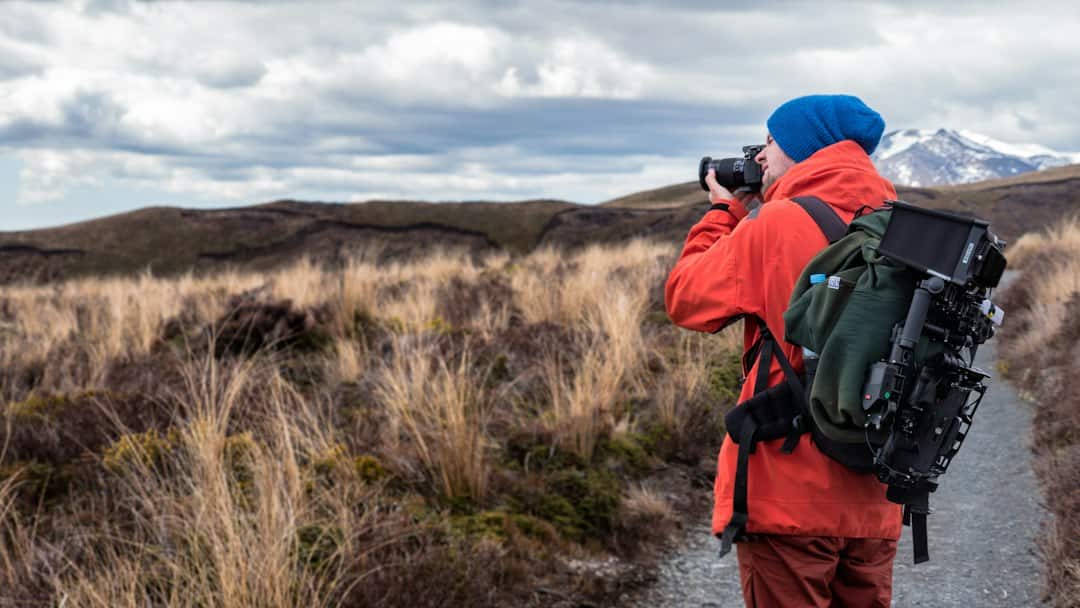
Size the bag around your largest assembled camera-and-lens combination, not its advertised liter rating. A compact mirrorless body with a small prime lens may fit neatly in a 3L-class sling, but the same body mounted to a large telephoto lens changes the required depth and opening width. Leave room for the hood, viewfinder and grip, protective padding, zipper clearance and a hand to lift the camera out.
Start by placing your regular kit on a table: body, mounted lens, one spare lens, spare battery, cards, phone and other essentials. Put any item you seldom use aside. Measure each component and compare against the internal dimensions and divider arrangement provided by the manufacturer. An advertised claim like “fits a DSLR plus two lenses” is a rough use-case description, not a guaranteed fit for every DSLR.
Then perform a mock carry check. Think about whether the weight of the packed bag will pull across the shoulder, whether you can rotate it while wearing a jacket, and whether the zipper is accessible while standing. A slightly smaller sling with fewer unnecessary items may carry more comfortably than the largest sling you can buy.
Sling versus backpack in real shooting situations
Street photography and city walks
For a small mirrorless camera, two compact lenses, b