
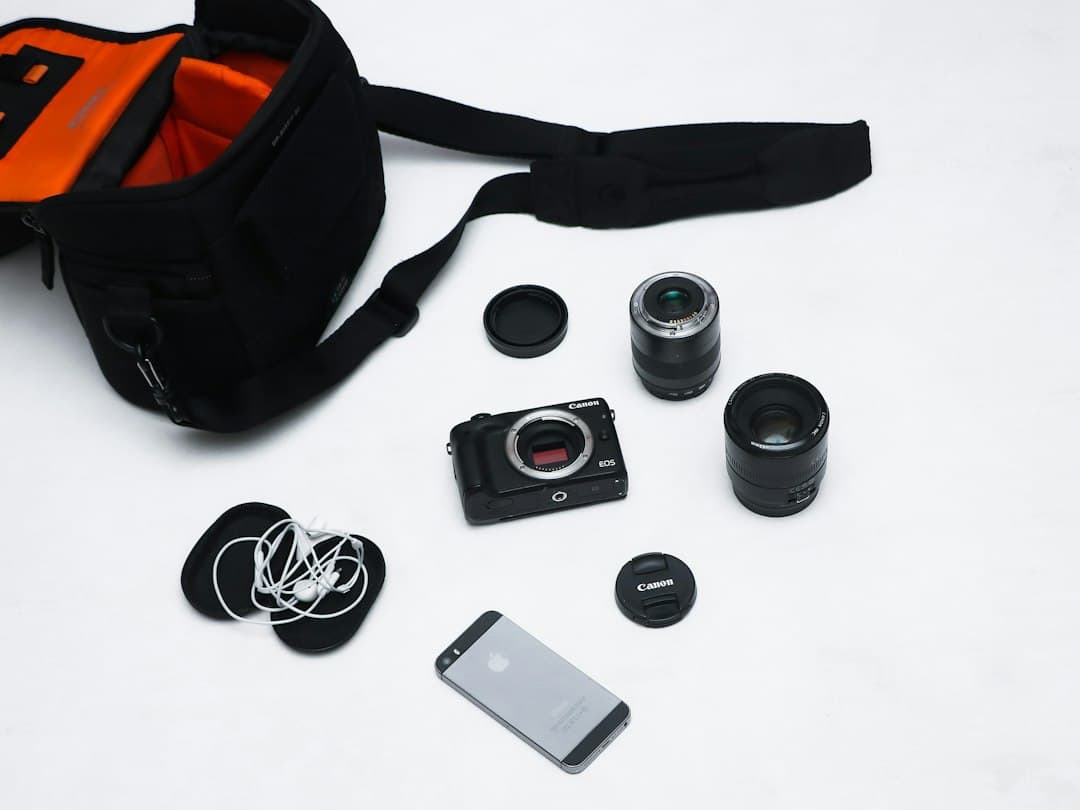
Camera Backpacks as Airline Personal Items: Under-Seat Fit Guide
Can a camera backpack count as an airline personal item? Yes, a compact camera backpack can qualify when it meets the operating airline’s personal-item rules and actually fits under the seat in front of you. But calling a bag a “camera backpack,” “personal item,” or “airline approved” does not exempt it from size limits. Those limits differ by airline, fare and sometimes the aircraft.
The key is to measure the fully packed outside of the bag—including straps, handles, bulging pockets and any attached tripod—and compare all three dimensions with the carrier’s current policy. A camera bag that works under an American Airlines allowance may be too deep for Air Canada or WestJet. A backpack’s advertised liters and the size of its internal camera compartment do not tell you if it can travel under a seat.
This guide focuses specifically on under-seat personal-item fit and camera-equipment protection. Our existing camera backpacks for air travel guide covers the broader choice between cabin baggage and checked luggage, while this page provides a current airline comparison, sizing examples, packing layouts and a practical preflight checklist.
Editorial transparency: Airline policy references were checked on October 31, 2026. These are published rules, not a claim that Proton-Pack physically tested any particular backpack on the airlines or aircraft discussed. Airlines can amend allowances, apply additional restrictions or change how they measure bags. Verify the operating airline and your fare before departure.
The quick answer: how small does a camera backpack need to be?
- Measure every side, not the capacity in liters. A 12L bag can be too tall, while a wider low-profile bag with greater volume may fit a published allowance.
- Use the tightest rule on your itinerary. If one leg uses a different carrier, aircraft or fare, check the conditions that apply to that leg.
- Leave a margin for the packed bag. Compression may reduce empty-bag measurements, but thick dividers, a laptop, batteries and side pockets expand the loaded dimensions.
- Under-seat is a separate test. Even when a bag passes listed dimensions, physical under-seat clearance can vary, and you may be directed to a different stowage location.
- Keep the camera equipment organized. Use padded dividers or a properly sized insert so a compact carry solution does not sacrifice protection.
Airline personal-item size comparison
These are personal-item limits, not the usually larger overhead-bin carry-on limits. Where a carrier publishes a fixed maximum, the dimensions below are arranged with the longest side first to make cross-airline comparison easier. The airline’s own page remains authoritative. Airlines may specify the order of height, length and width differently, but a physically rotated rectangular bag must still meet the three applicable side limits.
| Airline | Published personal-item allowance | Camera-bag implication |
|---|---|---|
| American Airlines | 18 × 14 × 8 in (approximately 45 × 35 × 20 cm) | An under-seat backpack may be relatively tall, but cannot exceed the specified thickness. |
| JetBlue | 17 × 13 × 8 in (43.2 × 33 × 20.3 cm) | Shorter and narrower than American’s published limit; check the packed height. |
| Air Canada | 43 × 33 × 16 cm (about 17 × 13 × 6 in) | The 16 cm depth can rule out thick camera backpacks or expanded side pockets. |
| WestJet | 41 × 33 × 15 cm (about 16 × 13 × 6 in) | A particularly shallow, short allowance; external tripod carriers and thick back panels matter. |
| Delta Air Lines | No fixed three-dimensional personal-item limit stated on the main carry-on page; must fit under the seat | Do not treat Delta’s 22 × 14 × 9 in overhead carry-on allowance as the personal-item limit. |
American explicitly says personal items must fit under the seat and be no larger than 18 × 14 × 8 inches. JetBlue publishes 17 × 13 × 8 inches. Air Canada shows 33 × 43 × 16 cm, and WestJet uses 41 × 15 × 33 cm. Delta lists small backpacks and camera bags as examples of personal items but does not establish an exact separate three-number personal-item limit on its main baggage guidance page. Those are materially different ways of defining the same travel category.
Take special care with Air Canada Economy Basic and WestJet UltraBasic itineraries. Depending on date, route and applicable exceptions, they may limit passengers to a personal item rather than the usual personal item plus standard carry-on. If you planned to put a larger camera bag in the overhead bin, that fare distinction can change your entire packing strategy. Check your booking—not just a general baggage chart.
Why a backpack labeled ‘personal item’ may not actually qualify
Marketing labels are not a substitute for measurement. One maker may call a 20L backpack an under-seat bag because it meets an airline’s dimensions, while another similarly sized bag is too tall or deep. A model may also be marketed toward United States carriers with 8-inch depth allowances yet exceed the 15–16 cm depth that some Canadian airlines publish.
Measure the outside including padded shoulder straps when packed down, a full front organizer pocket and any attached tripod or water bottle. For a camera backpack, the thickest point may be the lens compartment; for an everyday backpack with a cube, it may be where the padded insert presses against the laptop sleeve. A single inflated pocket can defeat an otherwise compliant bag.
Soft-sided fabric can sometimes compress slightly, but do not rely on the airline allowing you to force valuable camera gear into a sizing device. A protective backpack should retain enough structure that the contents do not press against the zipper or the aircraft seat hardware. “Fits only when crushed” is poor protection and an unreliable travel plan.
Two sample bag dimensions: why the airline changes the result
Imagine two hypothetical fully packed camera backpacks. These numbers are illustrative, not verified models or predictions of real aircraft under-seat clearance.
| Hypothetical bag (packed outside) | American | JetBlue | Air Canada | WestJet |
|---|---|---|---|---|
| 40 × 28 × 14 cm | Within published dimensions | Within published dimensions | Within published dimensions | Within published dimensions |
| 42 × 30 × 18 cm | Within published dimensions | Within published dimensions | Too deep (18 cm exceeds 16 cm) | Too long and too deep (42 cm and 18 cm) |
The second example shows why the thickness of a padded camera compartment matters. A pack only 42 cm long might sound compact, but a 18 cm depth can already exceed the published personal-item allowance on Air Canada and WestJet. Rotating the bag may not solve that mismatch because the same third dimension still has to fit within the smallest allowed side.
How to measure your camera backpack before a flight
1. Pack the exact equipment you intend to travel with
Lay out the camera, mounted lens, extra lenses, filters, spare batteries, cards, laptop and essentials. Organize them in the backpack exactly as you plan to travel; close every zipper and secure dividers. If you travel with a rain cover or tripod, determine whether those remain attached or inside the bag. The fully loaded silhouette is the one that matters at a gate.
2. Measure length, width and depth at their maximum points
Use a tape measure or a rigid ruler against the packed bag at rest, without deliberately crushing it. Check the bulging front pocket, handle, back-padding curve, exterior straps and protruding tripod head. The bag cannot be judged by the outside dimensions from a product page if you routinely expand it beyond those numbers.
3. Compare with the operating carrier’s personal-item rule
Some tickets include multiple airlines. If your booking says one carrier sells the flight but another operates it, read the rules that apply to the operating flight and your ticket. Check each leg. For a connection that changes aircraft size, your under-seat compartment may also vary. A broad “airline approved” product claim rarely reflects all those variables.
4. Check the gear’s internal fit separately
Passing a personal-item size test does not prove that your longest camera-and-lens combination has sufficient padding. Measure the camera with its largest mounted lens, including hood and camera grip, and compare it with the manufacturer’s internal compartment dimensions. Allow space around the zipper opening. Our camera bag capacity and fit guide provides a more detailed measurement process.
5. Think through the seat location
A passenger in a bulkhead row may not have ordinary under-seat storage directly ahead, and under-seat clearance differs between aircraft and even seat rows. Some personal items may need to be stowed in an overhead compartment during departure and landing. Follow the crew’s stowage instructions; a camera bag’s dimensions alone cannot guarantee that a specific seat provides room for it.
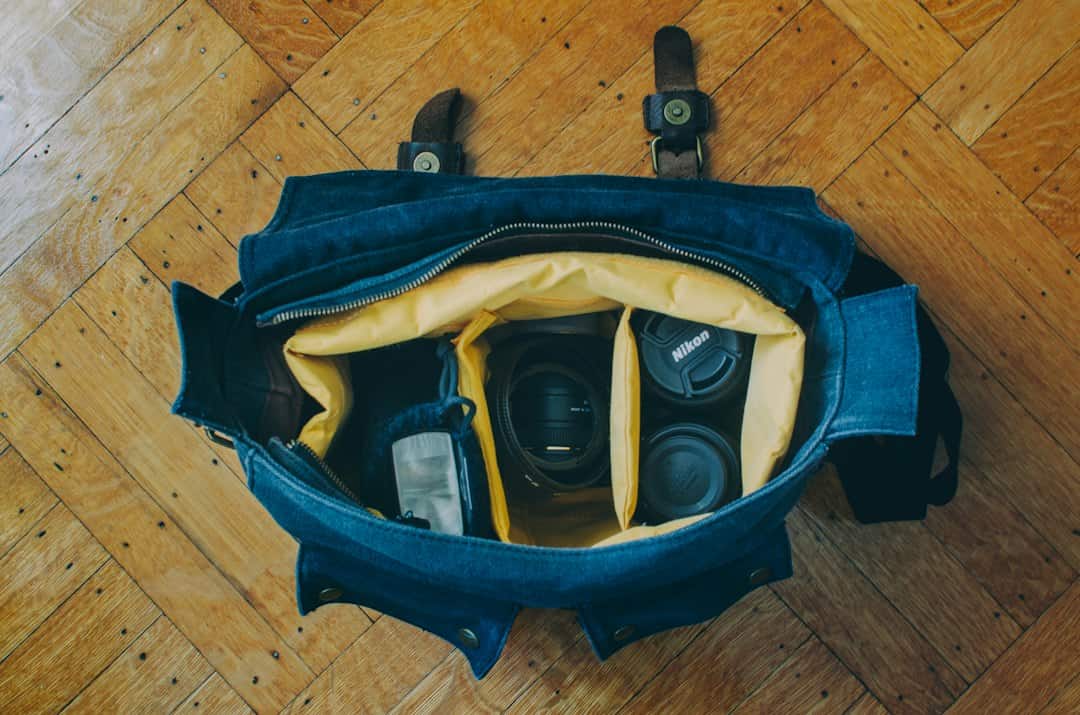
Should you choose a small camera backpack, sling or regular backpack with a camera cube?
A small dedicated camera backpack usually gives you fitted padding, customizable dividers and two shoulder straps. That is convenient when the entire under-seat allowance is reserved for cameras. But some camera-specific designs are tall and boxy, with a thick back panel that limits how shallow they can be when packed.
A camera sling often has a lower profile for one camera and an extra lens, and it can be easier to retrieve at your seat. It may be a strong personal-item choice for a compact mirrorless kit, but the single shoulder strap and available room become drawbacks with heavier equipment. See our camera sling bag versus backpack comparison for use-case details.
A regular daypack with a removable padded insert can look less like specialist camera equipment and keep room for travel essentials. The disadvantage is that the cube needs to fit the outer bag’s opening and stay stable while you move. The added thickness of its padding can also push an ordinary backpack over a tight airline depth limit. Our camera cubes and inserts guide explains the sizing trade-off.
| Carrying format | Potential benefit as personal item | What to inspect |
|---|---|---|
| Compact padded sling | Fast seat-side access and minimal bulk | Exterior thickness and fully loaded width |
| Dedicated small camera backpack | Padded camera zone and two-strap carry | Total packed height, back padding and tripod a |