

GoPro Carrying Cases Compared: Casey, Smatree & More
Affiliate disclosure: This article contains affiliate links (paid links). If you buy through them, Proton-Pack may earn a commission at no extra cost to you. As an Amazon Associate I earn from qualifying purchases. Learn about our editorial policy.
Which GoPro carrying case should you choose? That depends on how much equipment you carry. A small padded pouch is often enough for one HERO camera and a spare battery; a larger foam-lined organizer is better when you have several mounts, cables and chargers; a rigid weather-protective case may be useful for more demanding travel. These designs solve different problems, so a single universal “best” case is not meaningful.
This updated guide compares five case families and explains an additional specialist option. It also distinguishes an older archived Casey model from GoPro’s currently listed Casey Semi Hard (ABSSC-002) and Casey LITE (ABCCS-002), which differ in size and construction. Earlier versions of this article claimed that every product had been purchased and personally tested. Those claims were not supported by documented testing, so the guide is now based on available manufacturer and retailer specifications instead.
Five GoPro case styles compared
| Case | Strength | Important drawback |
|---|---|---|
| GoPro Casey Semi Hard | Official customizable padded protection; 1.8 L | Larger than a minimalist one-camera pouch; weather-resistant, not immersion-proof |
| Smatree G260SL organizer | Precut or customizable foam for a multi-accessory kit | Fixed layouts may not suit a newer camera cage or large mounts |
| Amazon Basics Large case | Generous 13 × 9 × 2.5-inch foam-lined layout | Older listing and fit examples refer mainly to earlier HERO generations |
| HSU Large carrying case | Precut sponge layout with room for an action camera and accessories | Capacity and compatible accessories depend on the precise variant |
| SUREWO compact hard case | Small, protective form factor for a simplified travel kit | Not enough space for a complete multi-mount setup |
None of these entries should be interpreted as a claim that we bought or lab-tested the exact items. Product designs and compatibility lists can change. Before ordering, verify the external size, usable interior, camera dimensions and the precise product model rather than relying solely on a generic “fits all GoPros” statement.
1. GoPro Casey Semi Hard — official customizable organizer
The GoPro Casey Semi Hard (ABSSC-002) is one of the clearest choices when you want an official, organized case with padding. GoPro lists a compression-molded, semi-rigid shell, soft lining, adaptable storage and a removable mesh pouch for batteries, memory cards and small accessories. Its published dimensions are 22.5 × 16 × 9.5 cm, with a total capacity of 1.8 L.
Those features make it more convenient for keeping a small kit together than dropping the camera and several hard mounting attachments into a loose pocket. The removable pouch is useful for items that could otherwise scratch the camera. Its drawback is straightforward: it is weather-resistant, not a certified waterproof case.
An older version of this article featured GoPro Casey ABSSC-001 (original Amazon listing). That original model is marked discontinued by some retailers. The current ABSSC-002 should be treated as a separate model and its specifications should not automatically be assigned to the older case. See the archived original Casey listing for confirmation.
Casey LITE: when smaller and lighter is better
GoPro also offers the Casey LITE (ABCCS-002), which is a different soft-sided travel case. GoPro publishes dimensions of 20 × 12.5 × 6 cm, a 1.4 L capacity and an 87 g weight. If your setup is one camera and a handful of accessories, the lighter model may be more convenient than the larger Casey. You give up some rigidity and total storage room.
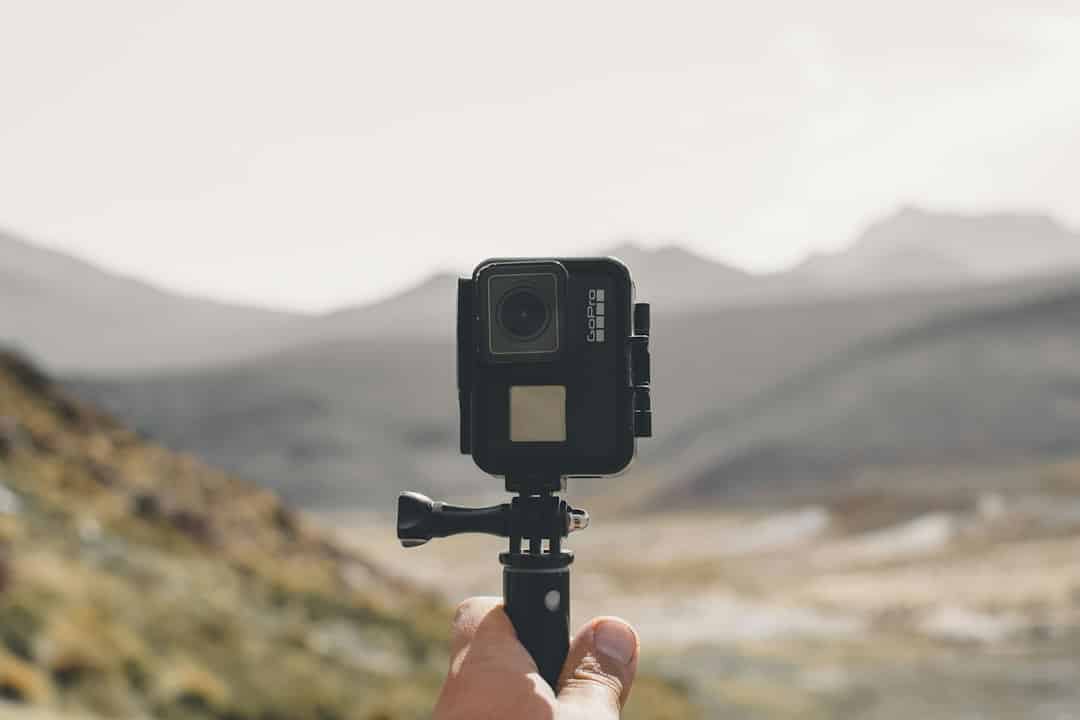
Illustrative GoPro photograph by Franco Salcedo via Unsplash. This is not a photograph of the reviewed Casey cases.
2. Smatree G260SL — organizing accessories in fitted foam
The Smatree G260SL-style organizer in the original comparison (original product listing) uses shaped EVA-style foam compartments to hold a camera and accessories separately. A legacy listing describes external measurements around 10.6 × 8.3 × 2.8 inches and a layout with camera slots and a zippered mesh area. The point of this design is predictable organization: camera, batteries, mounting screws and smaller parts each have a dedicated location.
This layout is less flexible when you change the shape of the camera setup. If you add a media module, cage, oversized lens accessory or bulky microphone, the preconfigured space may become a poor fit. Some foam may be customizable, but always verify the dimensions against the case variant being sold. Avoid treating older GoPro compatibility lists as proof of fit for every current model.
Who should consider it?
It is a sensible style to compare if you want to see at a glance whether every battery and mount has been packed. A minimalist one-camera traveller may find it too large, while a creator travelling with several separate attachments might appreciate the additional spaces.
3. Amazon Basics Large — room for more equipment
The Amazon Basics Large GoPro carrying case (large-model retailer specifications) has a listed exterior size of approximately 13 × 9 × 2.5 inches. Retailer documentation describes a protective EVA-foam interior with precut slots, a zippered closure and a carrying handle, with capacity described for two older GoPro cameras and accessories. Its broad layout is a reason to compare it if you have a larger collection of smaller attachments.
The drawbacks are its footprint and older compatibility claims. Lists describing HERO4, HERO5 and HERO6 cameras are not a reliable fit guarantee for current products with different dimensions or accessory modules. Verify the actual foam cutouts, and do not assume two mounted cameras will fit if the examples use smaller older bodies. Refer to the documented legacy product details before comparing today’s seller listings.
4. HSU Large — a flexible third-party option
The HSU Large case family appears in the manufacturer’s current carrying-case catalog. The published version includes a sponge or foam layout designed to hold an action camera and accessories, and the manufacturer currently advertises compatibility across several GoPro HERO generations and other action-camera brands. That makes HSU a practical name to compare when looking for a larger organizer than a basic pouch.
However, model-specific sizes, interior layouts and compatibility can change. Check the exact listing against the current camera version and your mounts; “large” does not by itself say how many full-size grips or chargers fit. The older Proton-Pack article linked to an HSU large-case Amazon listing; that original affiliate destination is retained, but its live redirect and inventory have not been independently verified.
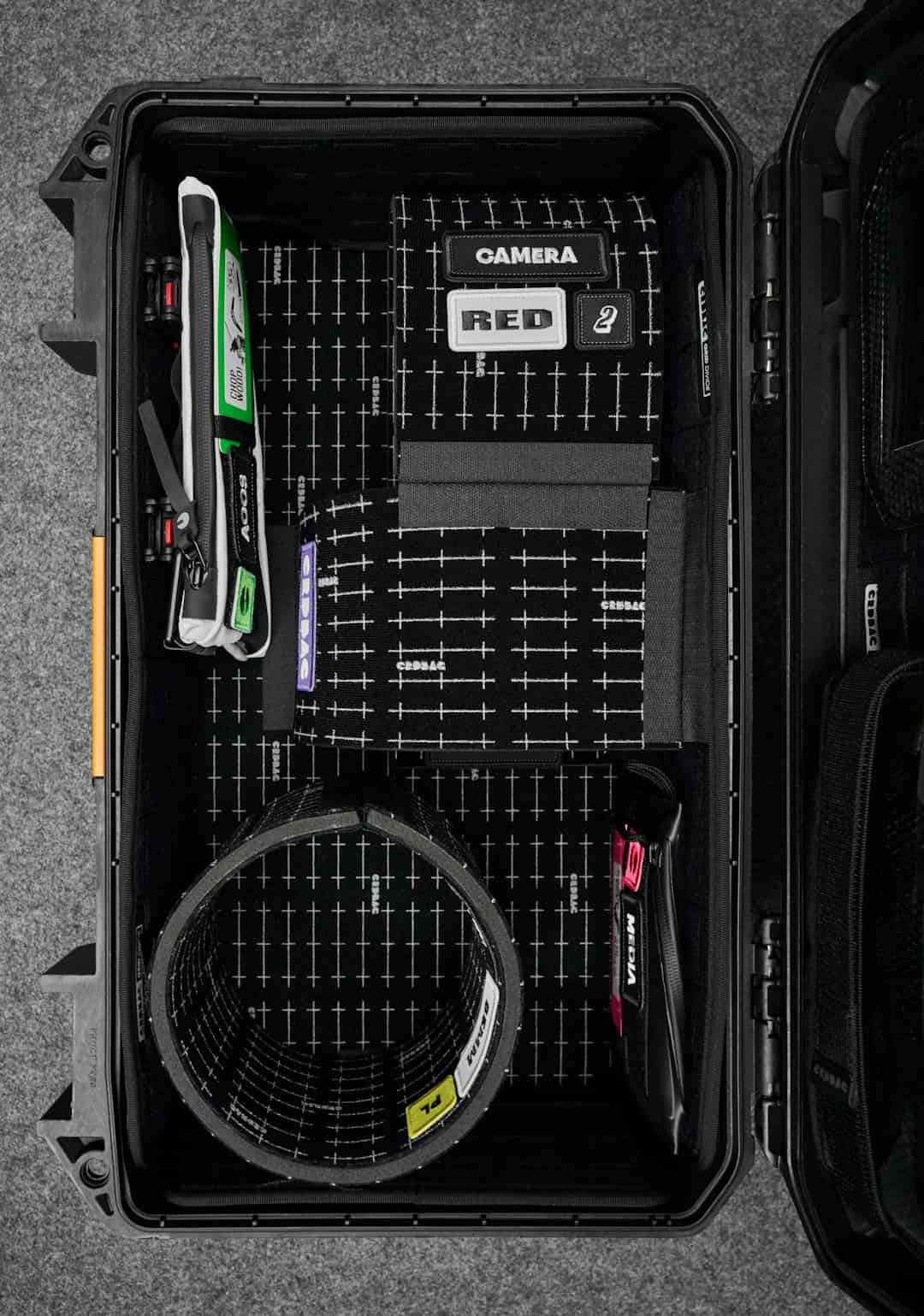
Illustrative equipment-case photograph by Andreas Näslund via Unsplash. It is not an HSU case or a tested GoPro product.
5. SUREWO Mini Hard Case — a more compact alternative
SUREWO’s current catalog includes compact hard carrying cases for GoPro HERO cameras. The smaller case in the older article (original SUREWO product listing) is intended for travellers who want basic protective storage rather than a big organizer. Its main advantage is reduced volume. That can be helpful when the case will live inside a larger backpack.
The compromise is accessory space. A mini case may protect one camera while leaving little room for a charger, handle, extra batteries or bulky mounts. Review the case dimensions and whether the described compatibility includes the exact HERO model with any modules attached. A “hard” case also is not automatically waterproof; check the manufacturer’s complete-product rating rather than relying on a word in the title.
Specialist alternative: Smatree waterproof hard compact case
The previous comparison also included the Smatree ABS-style hard case (original Smatree waterproof-case listing). This model is marketed with a rigid shell, pre-cut foam and a latching seal, aimed at protecting a camera plus small accessories. It is worth investigating if you expect more water exposure than a normal padded zip case is designed for.
A seller’s waterproof claim should be checked against the exact model’s stated test conditions. Avoid assuming that the case remains sealed after damage or modification, or that every current GoPro accessory can fit its pre-cut foam. The case is a specialist option, not automatically a better everyday organizer than Casey or a larger foam case.
How to choose the right size
Start by writing down the complete kit: camera, protective housing, battery charger, mounting buckle, clips, cables, memory cards and any longer handle. Then measure the longest and widest assembled items. An action camera without attachments can fit a small compartment, while the same camera attached to a media module or external housing may not.
- For one camera and a battery, prioritize a compact pouch or short case.
- For several tiny mounts and adapters, prefer dividers or foam pockets that keep parts separated.
- For two cameras or a larger collection of gear, check an organizer’s measured interior rather than assuming a generic “large” size will work.
- For travel near water, distinguish light-rain resistance from any tested water-ingress protection.
- For airline travel, check any carried batteries against current carrier rules and keep loose metal mounts from contacting exposed battery terminals.
Weather resistance versus waterproof protection
The most common mistake is treating a weather-resistant zipper case as a waterproof enclosure. GoPro explicitly describes Casey and Casey LITE as weather-resistant. That helps with ordinary exposure to rain or snow, but neither listing claims the case is suitable for immersion. A product advertised with a latching watertight design still needs to be checked against its complete-product water-rating and condition.
Our guide to waterproof dry bags and electronics explains closure limitations and how to think about different types of protective equipment. For action cameras, a protective shooting housing is also a different product from a carrying case that stores the camera between shoots.
What to verify before buying a case
- Exact model or SKU: the original Casey ABSSC-001 and newer ABSSC-002 are different products.
- Interior fit: allow space for protective housing, attached modules and mounts.
- Protection: separate resistance to knocks from resistance to moisture.
- Organisation: make sure accessories do not scratch the camera lens or screen.
- Closure: examine hinges, zippers and latches for the intended use.
- Availability: product listings for older cases may be discontinued, revised, or sold by third parties.
- Value: compare verified features and dimensions, not only a headline discount or review count.
Frequently asked questions
Is an official GoPro case always better than a third-party case?
Not necessarily. GoPro Casey has clear manufacturer specifications and a customizable padded design, but a different case may be better for a larger collection of mounts or for a specific protective requirement. Compare real dimensions and construction.
Can a carrying case be used underwater?
Do not assume so. An ordinary padded storage case is usually intended for transport, not use as a waterproof camera housing. Read the complete protection rating for any specialist case before exposing expensive electronics to water.
Will a GoPro HERO13 fit in an older GoPro case?
It depends on the foam shape, available space and whether accessories are attached. A general compatibility list from an older case cannot guarantee fit; compare actual dimensions and the newest manufacturer’s listing.